

Late Odds Movement and What Usually Causes It
Late Odds Movement and What Usually Causes It
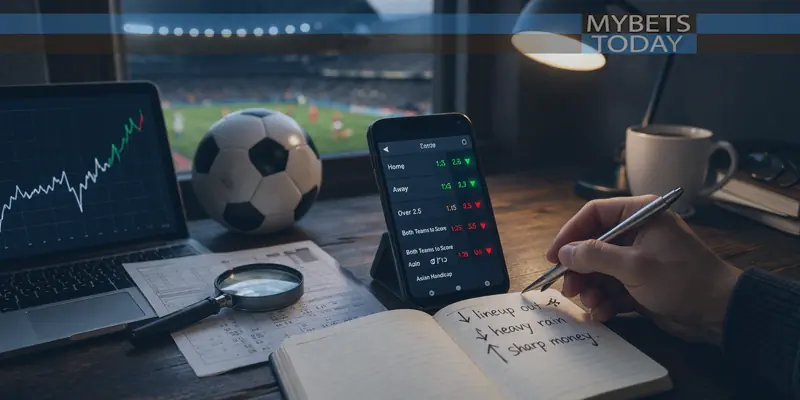
Anyone who follows football betting for long enough will notice that odds do not stay still. A price that looks strong in the morning can be very different by the afternoon. By the time the match is close to kick off, the number may have moved again. This is what many bettors call late odds movement, and it is one of the most watched parts of the betting market.
For many everyday bettors, this can feel confusing. You may find a team at a good looking price early in the day, then check again later and see that the odds have dropped. In other cases, a favourite may drift and suddenly look less trusted by the market. Some people assume this movement is random. Most of the time it is not. Odds usually move because new information enters the market, or because money comes in strongly on one side.
The closer a match gets to kick off, the more accurate the market often becomes. That does not mean the market is always right, but it does mean there is usually more information available and more money shaping the final price. This is why late movement matters. It can tell you what the market is reacting to, what traders are adjusting for, and where the strongest confidence may be building.
Understanding late odds movement does not mean you have to chase every change. In fact, that is often a mistake. What it does mean is that you can read the market better. Instead of just seeing a number move, you start asking why it moved. That question is where better betting decisions often begin.
What Late Odds Movement Really Means
Late odds movement simply means a noticeable change in betting prices shortly before a match starts. This can happen a few hours before kick off, in the final hour, or even in the last few minutes. Sometimes the move is small, such as a home team going from 2.10 to 2.00. Other times it is much stronger and gets the attention of almost everyone watching the market.
When odds shorten, it usually means that side is being backed more heavily or that fresh information has made the bookmaker reduce the price. When odds drift, it usually means the opposite. The market becomes less confident in that outcome, or more interested in the other side.
These moves can happen in match result markets, totals, both teams to score, Asian Handicap, corners, player props, and many other betting lines. The same basic idea applies across them all. Prices shift because the market is reacting.
Why Odds Move More Late Than Early
There is a simple reason why late movement gets so much attention. More reliable information becomes available closer to the match. Early prices are often based on ratings, recent form, expected lineups, and general market opinion. Later prices are shaped by stronger details such as confirmed team news, weather, tactical clues, and sharper betting action.
Also, more money tends to enter the market later. Casual bettors often place bets close to kick off, and serious bettors may wait until they have the most complete picture possible. That combination creates more pressure on the market, and prices respond faster.
This is why the closing period before a match can be so active. The market is no longer trading on broad expectations alone. It is trading on the best version of the available information at that point in time.
The Most Common Causes of Late Odds Movement
There are several reasons why odds move late, but some causes appear much more often than others. Once you understand them, the market starts to make more sense.
Confirmed team news
This is one of the biggest causes of late movement. If a star striker is missing, if a first choice goalkeeper is out, or if a key midfielder is rested, the odds can change quickly. Football is a team game, but certain players still have a major effect on how the market rates a match.
Lineups matter even more in leagues where squads are not equally deep. A big club may be able to rotate without too much damage. A smaller club may weaken sharply if two or three important players are not in the starting eleven. Once the official team news is released, bookmakers and bettors react fast.
Injury updates and fitness doubts
Sometimes the market moves before the official lineup because trusted information leaks early. A player may have picked up a problem in training, or a coach may decide that someone is not fully fit. Even if the news is not yet official, sharp bettors will often react quickly when they believe the source is reliable.
This kind of move can be strong because it hits before casual bettors fully understand what is happening. By the time most people notice, the best number may already be gone.
Sharp money from respected bettors
Not all money is treated the same way by bookmakers. If many small recreational bets come in on one side, the price may move a little. If large bets arrive from respected accounts or market shaping bettors, the move can be much stronger. Bookmakers know that some bettors have a long record of beating the market, so their action carries more weight.
This is one reason odds can move even when there is no visible public news. The market may be responding to smart money rather than headlines.
Changes in expected lineups
Even when there is no major injury, late movement can happen because the expected tactical setup changes. A team may switch to a more defensive shape. A coach may rotate full backs or wide players. A side that was expected to press high may suddenly look much more cautious on paper.
These details affect totals, corners, Asian Handicap lines, and general match prices. The market is not only reacting to names. It is also reacting to the likely shape of the game.
Weather conditions
Weather may not seem as important as team news, but it can move betting lines, especially totals and goal related markets. Heavy rain, strong wind, poor pitch conditions, or extreme heat can all change how a match is expected to play out.
A game expected to be open and fast may suddenly look slower and more difficult for attacking football. In those cases, over and under lines can shift close to kick off as traders adjust their expectations.
Market correction
Sometimes the opening line is just a bit wrong. This happens more often in smaller leagues, youth matches, lower divisions, and games with less public attention. As more bettors study the match, the market corrects itself. If many people agree that the original price was too high or too low, the odds can move strongly later in the day.
This does not always mean that late bettors are smarter than early bettors. Sometimes early bettors caused the correction in the first place by spotting the wrong number before everyone else.
How Public Money Can Affect the Market
Not all late movement comes from inside information or professional betting. Public money can also play a role, especially in big matches. If a famous team is playing and a large number of casual bettors back that side, bookmakers may trim the odds to manage risk.
This is common with very popular clubs and national teams. Many casual bettors prefer to back brands they know well, even when the price is not ideal. If enough money comes in that direction, the odds can shorten even without important new information.
That is why it is important not to assume that every late move is a secret signal from experts. Some moves are smart. Some are public. Some are a mixture of both.
Why Asian Handicap and Totals Often Move Fast
Late movement is often easiest to spot in Asian Handicap and totals markets. These are markets where sharper bettors are very active, because the lines can be more sensitive to team news, tactical changes, and model based betting.
For example, if a key defender is ruled out late, the market may not only shift on the match winner. It may also move on over goals, both teams to score, and the handicap line. If a team fields a weaker attack than expected, totals may fall and the handicap may become less aggressive.
This is why many experienced bettors watch several markets at once. One shift often leads to another. If you only look at one price, you may miss the full story of what the market is reacting to.
When comparing prices and trying to understand whether a move creates value across different bookmakers, it can be useful to check a surebet calculator as part of your process. It helps you see how changing odds affect possible returns and can make price comparisons much easier when the market is moving fast.
Does Late Movement Always Mean the Bet Will Win
No. This is one of the biggest mistakes bettors make. A strong late move does not guarantee the result. It only tells you that the market has become more confident in one side or has reacted to new information. Football remains unpredictable. A well backed team can still lose. A drifting underdog can still surprise everyone.
What matters is not treating market movement like magic. It is a clue, not a promise. Sometimes the market gets it right. Sometimes it overreacts. Sometimes the move is logical but the match still goes in an unexpected direction. That is normal.
The smartest way to use market movement is to combine it with your own reasoning. If a line moves and you understand why, that is useful. If a line moves and you have no idea what caused it, then caution is usually the better choice.
How To Read Late Odds Movement More Clearly
If you want to make better use of late movement, start by asking a few simple questions.
-
Did team news just come out
-
Has there been a major lineup surprise
-
Is the move happening in several bookmakers at once
-
Are other linked markets moving too
-
Is this a public match where fan money may be involved
-
Did the opening line perhaps look weak from the start
These questions help you separate noise from useful information. A move across many serious bookmakers at the same time usually means something real is driving the change. A move at only one place may simply reflect local risk management.
It also helps to track timing. Some moves happen the moment lineups are released. Others build slowly through the day. Fast moves often come from direct information. Slow moves may come from steady market opinion or public betting flow.
Should You Bet Early or Wait Late
There is no single answer for every bettor. Betting early can be good if you think the opening line is wrong and you want to grab the best price before the market adjusts. Waiting late can be good if you value confirmed lineups and the clearest possible picture of the match.
Both approaches have strengths. Early bettors can beat the closing line when they read the market well. Late bettors can avoid bad guesses about lineups and fitness. The best choice often depends on the league, the type of market, and how much uncertainty there is before kick off.
In highly followed leagues, late prices are often very efficient. In smaller competitions, early mistakes may be more common. That is why many serious bettors adapt their timing based on the match rather than forcing the same approach every time.
Common Mistakes Bettors Make With Late Movement
Chasing steam without context
Some bettors see odds dropping and immediately jump on the same side without knowing why. This can be risky. By the time you react, the value may already be gone. If you do not understand the cause, you may simply be taking a worse number than the people who moved the market in the first place.
Ignoring price value
A team can still be the right side at 2.20 and the wrong side at 1.85. Movement matters, but price still matters more. Good betting is not just about finding winners. It is about finding worthwhile prices.
Overreacting to rumors
Not every piece of late information is true. Social media can push weak stories very fast. If you react to every rumor, you will make poor decisions. Reliable information matters far more than noise.
Assuming drift means danger every time
Sometimes odds drift because of balanced risk management rather than strong negative news. A drifting price is not always a warning sign. It may simply mean money came in on the other side.
Final Thoughts
Late odds movement is one of the clearest signs that the betting market is alive and reacting in real time. Prices move for reasons, and those reasons are usually linked to information, money, or both. Team news, injuries, tactical changes, weather, public betting, and sharp action are among the most common causes.
For everyday football bettors, the key is not to fear late movement or blindly follow it. The key is to read it properly. When you understand what usually causes prices to change, you can make calmer and smarter decisions. You stop guessing and start interpreting.
That is where market awareness becomes useful. A moving line does not tell you everything, but it tells you that something important may be happening. If you can work out what that is, you give yourself a much better chance of making disciplined and informed bets over time.